
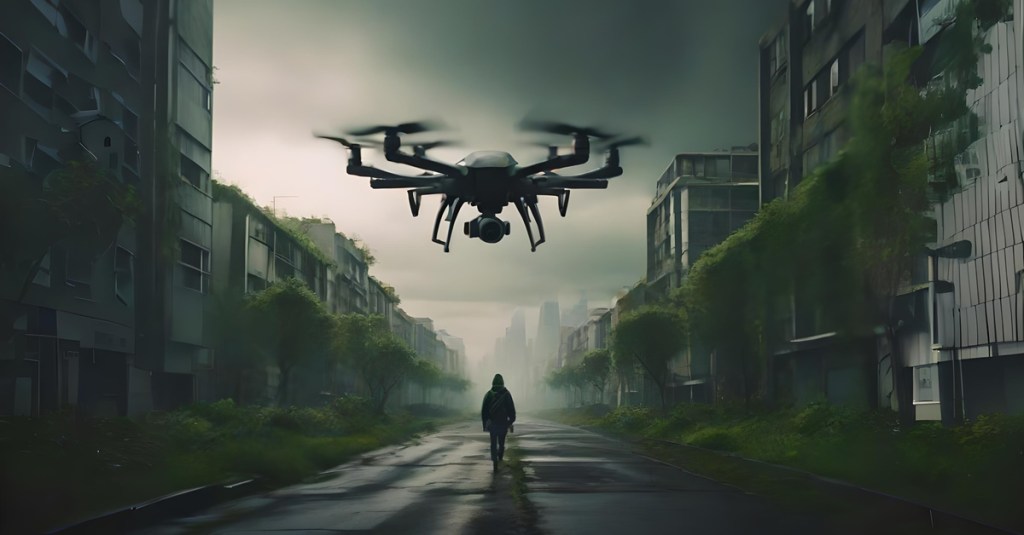
Eighty-two percent of the general population, surveyed globally, expressed no opposition to the use of digital surveillance in times of emergency when it could help save lives. The preservation of life is the driving factor behind people relinquishing their right to privacy. Active support for digital surveillance is acknowledged to be dependent on the context in which surveillance is performed. In the same survey, a smaller yet substantial proportion of the general population across 29 countries still expressed no opposition to the use of digital surveillance to tackle the climate crisis.
Regardless, all respondents expected digital surveillance for the purpose of sustainability to increase. This is something I have experienced firsthand while driving in London. The notorious Ultra-Low Emission Zone (ULEZ) is possibly the most significant exercise of surveillance for the purpose of sustainability on British shores. Though residents and visitors may oppose the surveillance of vehicles and movement through the use of roadside cameras in theory, in practice, only a minority take action to hinder surveillance.
In alignment with the United Nations Sustainable Development Goals (SDGs), a more sustainable world is indicated by following a trajectory toward less inequality and a smaller carbon footprint. Whether the world becomes more sustainable or less sustainable, and whether the priority is equality or the environment, research suggests the expectation is that digital surveillance will increase substantially. It is an inevitability.
There have been debates over the effectiveness and ethics of digital surveillance and tracking, even in times of emergency. As reports of the increasing threat of the climate crisis become more prevalent in popular media, digital surveillance emerges as a viable countermeasure to monitor and manage the carbon emission impacts of individuals. Such surveillance may go beyond what you and I are comfortable enduring, involving the automated collection of personal data and the monitoring of behaviour, habits, and lifestyle choices through internet-enabled devices (i.e., smartwatches and mobile phones).
In another survey, 50% of respondents affirmed their openness to enforcing controls to limit the carbon emissions of individuals. There is a climate emergency, right? The COVID-19 pandemic may seem like a flash in the pan compared to the ongoing threat of climate change that can be leveraged to implement limits on individual freedoms. It is the subject of present exploration to determine how and if digital tracking tools can be used ethically. In other words, can these surveillance technologies be used without compromising individual rights while maintaining the pursuit of sustainability through cutting global carbon emissions? Or will these be competing factors? Which way will the scales tip?
In the race against COVID-19, contact tracing used the automated collection of personal data through digital technologies. Mobile devices, mobile applications, social media, and biometric technologies were all fair game across the world. Some scholars have warned of increasing threats to the nature of democracy as a result of more surveillance and tracking tools. How readily will we turn to digital surveillance and tracking tools to address other, more severe global collective threats to human security, such as climate change? That is the question posed in research papers. Moderate support was seen during the COVID-19 pandemic primarily because the measures appeared justifiable. Research acknowledges that support is subject to transparency and responsiveness when applying these controls, while ensuring the public is on board. On an international scale, a global governance framework is considered essential to the effectiveness of control for climate action.
The research mentioned thus far has been taken from material available at ‘Sustainability in the Digital Age,’ a co-champion for the Coalition for Digital Environmental Sustainability (alongside the United Nations Development Programme and United Nations Environment Programme). Technology is pitched as the solution to fulfilling humanity’s duty to care for nature, but not in the way we would expect. The control of individual freedoms is considered a viable option for climate action by those working in partnership with the United Nations.
Dear reader, I anticipate that the threats to your freedom and privacy outlined here have not escaped your concern. It is not my intention to cause alarmism. In fact, it is the alarmism that surrounds you and me that prompts me to draw attention to the trends in research and the leaning of learned and influential people toward authoritarian endeavours in the name of climate action.
Now, we know that authority is not inherently bad. But, if I were to relinquish all my freedoms and privacy to an authority, I would have it be an authority that truly holds my best interests at heart. Reader, there is surveillance and tracking that neither of us can escape. Nevermind taking climate action or resisting the emerging threats to your freedoms. There is surveillance and tracking that leaves you entirely bare with nowhere to hide. Any action other than immediate surrender is in vain. I’m referring to the divine surveillance that God undertakes.
The omniscience of God is real. He has the perfect vantage point to see you and me. He watches closely and examines our conduct (Psalm 11:4). The reality of God knowing the shameful places our feet have taken us far outweighs the prospect of the powers that be scrutinising our carbon footprints. Be sure to get your priorities right. Even those with the best of intentions have flawed characters, but not so with God. Abuse of power is a blight on humanity, but not on God. He is good and does good (Psalm 119:68). I urge you to forsake trust in human power (including whatever power you may seem to have). Turn to the God who came in flesh to walk the earth and died for sinners in the person of Jesus Christ. He who now rules over all and truly cares for you.
The hopeful planning of influential people will continue. Emerging trends, such as those outlined here, may sometimes slip my attention. God watches over everything, even all the futile blueprints people draw up. When God stops humanity in its tracks for one last time, He will hold all people accountable before Him. Until that happens, I fully expect we will once again trace the track that global powers intend for us to tread trustingly.
Sources
- Garard, J., Wood, S. L. R., Sabet-Kassouf, N., Ventimiglia, A., Matthews, H. D., Ubalijoro, É., Chaudhari, K., Ivanova, M., & Luers, A. L. (2022). Moderate support for the use of digital tracking to support climate-mitigation strategies. One Earth, 5(9), 1030–1041. https://doi.org/10.1016/j.oneear.2022.08.005.
- Wood, S., Luers, A., Garard, J., Gambhir, A., Chaudhari, K., Ivanova, M., & Cronin, C. (2021). Collective foresight and intelligence for sustainability. Global Sustainability, 4, E3. doi https://doi.org/10.1017/sus.2021.3.
- Sustainability in the Digital Age, Future Earth Canada, and Imperial College London Grantham Institute for Climate Change and the Environment. (2020). Where is the world headed post-COVID-19? Expected trends in the coming three years. https://doi.org/10.5281/zenodo.5645263
 World Unyielding
Leave a comment